Fresenius Kabi: our operators now work in the same standardized way
Fresenius Kabi in the Netherlands produces tube feeding in EasyBags, where hygiene, quality and consistency are absolutely critical. The EZ-GO platform safeguards standardized processes while giving operators maximum support.
3production lines live at launch
20minute visual inspection
6months to clear benefits
<1minute to log an action
Manager Production Roel Barelds, allround operator Marten Pals and teamlead Romano Vonkert explain how they set it up and what it has brought so far.
From paper to digital
Growth demands digitalization
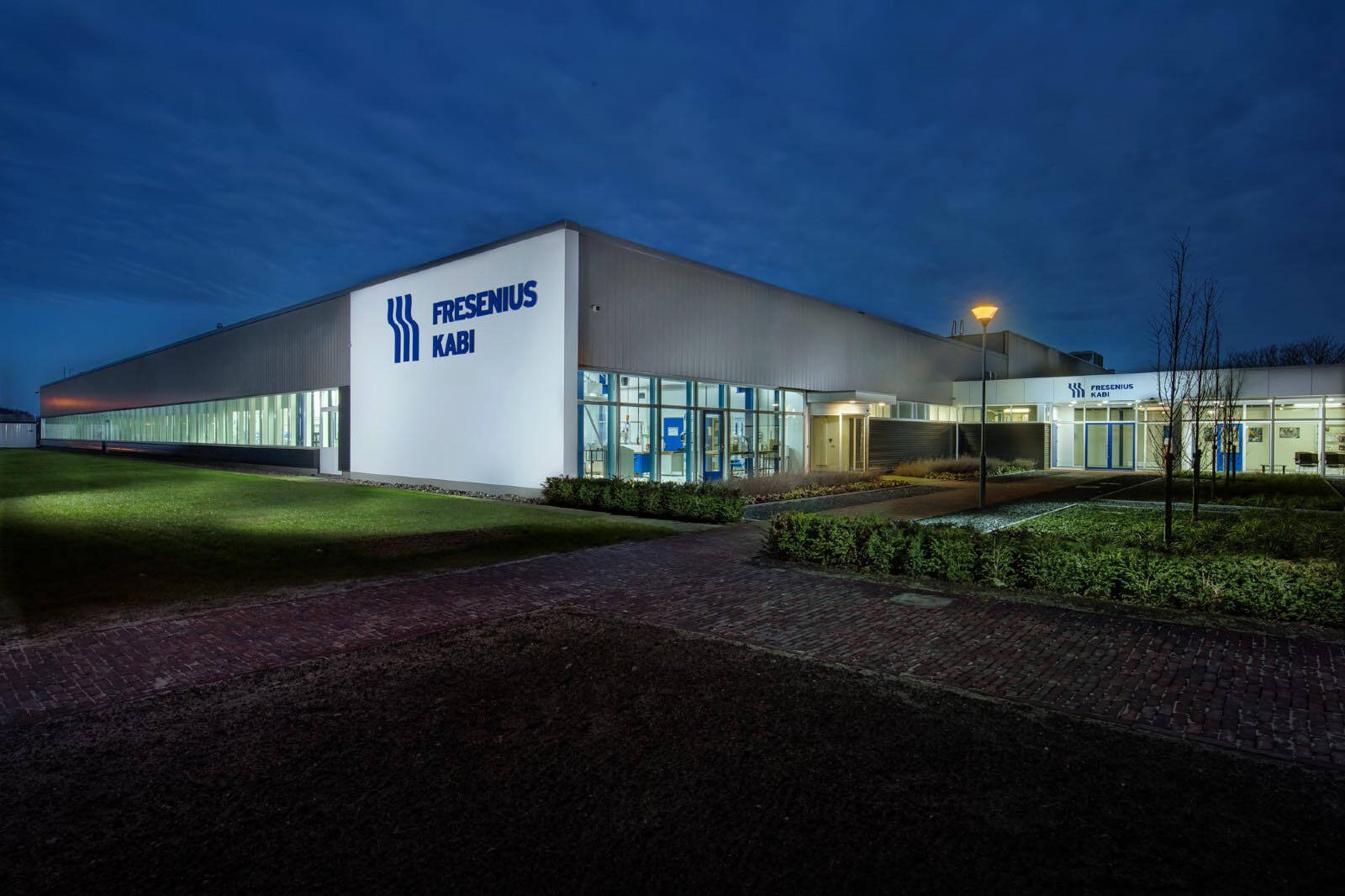
Fresenius Kabi is a multinational company that supplies medicines and technologies for chronically ill patients, with production facilities around the world. The plant in Emmer-Compascuum, the Netherlands, produces tube feeding in EasyBags.
As part of the corporation’s ambition to further digitalize production, Manager Production Roel Barelds initiated a pilot with the EZ-GO platform in the Netherlands. According to Barelds, the most important criterion was ensuring alignment with the TPM philosophy, in which standardization plays a crucial role. “The EZ Factory motto, ‘Power to the Operator’, truly resonated with the team and with our philosophy.”
EZ-GO was selected as the platform of choice. It supports all aspects of the production process and provides operators with greater autonomy within established guidelines.
“The system has to work for us, not the other way around.”
Roel BareldsManager Production, Fresenius Kabi
Standardizing
Everyone performs their work the same way
The professional organization approached the implementation with a clear vision, explains experienced allround operator Marten Pals: “First, we defined exactly what we wanted to use the platform for. Then we configured it step by step. For us, quality takes precedence over quantity. Moving too quickly can become a pitfall in processes like this.”
Although the organization initially intended to roll out EZ-GO in a single area, the implementation progressed faster and more smoothly than expected. All three production lines were able to go live successfully during the initial launch, with a clear focus on the scope of phase one: cleaning and autonomous maintenance.
Pals: “For cleaning, we previously worked with paper logbooks. That took a lot of time and offered limited options for registration or adding instructions. We have now digitalized the entire process, including all underlying data. With autonomous maintenance, we as operators take on greater responsibility for our machines. The system shows what needs to be done, when, and how.”
Several operators contributed to configuring the system. Barelds adds: “We appointed EZ-GO ambassadors who helped bring the entire team along. Because they were involved from the very beginning, we have seen a very positive impact on teamwork and ownership on the shop floor.”
Phasing
First the foundation
EZ-GO offers a wide range of functionalities. “The foundation right now consists of tasks, checklists, and work instructions,” explains teamlead Romano Vonkert. “Those need to be in order first, everything else can be built on top of that.”
Pals illustrates this with the example of cleaning: “Previously, we had to pull out various paper forms and sign them off manually. That was impractical and time-consuming. For each shift and each area, I can immediately see which tasks need to be carried out. Within each task, there is a checklist or work instruction. Everything we create includes photos and videos, so you can see exactly what is expected. We sign off directly in the system, and where needed, we can add comments or photos.”
Implementing together
A bottom-up approach
The standardized working method was developed bottom-up, with input from everyone involved. Vonkert explains: “That’s how you secure commitment from everyone who will be working with it. For cleaning, we started from the existing procedures, which we reviewed and refined where necessary. Once we had captured all cleaning tasks in EZ-GO and went live on the shop floor, we immediately received valuable feedback from the operators. They would say things like: ‘We only do this in the evening’ or ‘We do this every shift’. After agreeing on the standard, we were able to adjust and update the system within minutes.”
“We defined the optimal procedures for autonomous maintenance together with Engineering and our technical colleagues,” Vonkert continues. “We are now working with Technical Services on the out-of-control action plans, which describe what to do when problems occur. This places more responsibility with the operators, which increases their sense of ownership and makes their work more engaging. At the same time, it reduces the workload for Technical Services.”
“Together, we define the optimal working method.”
Romano VonkertTeamlead, Fresenius Kabi
Results
Quality, cleaning and maintenance are improving
By mid-2025, the first modules of the EZ-GO platform had been implemented at Fresenius Kabi Netherlands. After six months, those involved were already seeing clear benefits to production. Pals: “We can already see improvements in cleaning. The work is clearer, so nothing can be forgotten, and with the work instructions always available, especially with the visual photos and videos, it’s almost impossible to do it wrong. Autonomous maintenance is improving as well.”
Vonkert adds that the 20-minute visual inspection with mandatory picture proof has significantly strengthened the focus on quality. Since this quality control was implemented in EZ-GO, no production blockages have occurred, because potential issues are identified quickly and addressed before they can escalate.
EZ-GO requests picture proof at specific checks, making the inspection both verifiable and consistent. That increases operators’ awareness of the importance of the inspection, and it provides valuable data for analysis and continuous improvement.
Continuous improvement
Small effort, great results
Another module Fresenius Kabi Netherlands uses is the Action module. Vonkert explains: “This allows operators to quickly report technical issues to Technical Services. Creating an action takes less than a minute. The teamlead reviews it and then forwards it. From that moment on, the work order can be tracked in the system. The operator can see that progress is being made and can check the status when needed.”
“Issues that previously caused frustration are now within the operator’s control. It also ensures smoother communication between the shop floor and the technical department, because everyone stays informed rather than not knowing the status, as before.”
Next steps
More features, more value
This is only the beginning, says Vonkert: “All areas now use EZ-GO. Within those areas, after cleaning, autonomous maintenance and the action plans, we will also incorporate best practices into the system for activities such as start-ups and changeovers.”
“Our aspiration for the first quarter of 2026 is to implement the digital skills matrix and assessment module, which will make training and evaluating operators much easier. What we are using today represents only a small part of its full potential. We are deliberately choosing to implement everything in phases, so we can ensure that each functionality is introduced thoughtfully and in a controlled manner. That is when it has the greatest impact on our quality and efficiency.”
Want the same on your own shop floor?
In half an hour we show you what EZ-GO does with your safety, quality and efficiency. On your own lines, not on a slide.