

Safety you can prove
Prevent safety incidents by making sure inspection and lubrication tasks never get skipped.
Schedule recurring autonomous maintenance tasks with the EZ-GO platform. That way, your plant's baseline condition doesn't depend on who happened to remember in time.
Trusted by
Task management in EZ-GO covers recurring autonomous maintenance tasks, such as cleaning, inspections, and lubrication, per production line, work area, or machine. Operators see in real time what they need to do and when, with work instructions right at the workstation. A deviation is reported and followed up immediately, and Plan-Do-Check-Act reports show whether the plant's baseline condition is improving.
Without clear ownership, it's exactly the critical actions that get left behind, and the same breakdowns keep coming back. That leads to downtime that affects your deliveries.
A maintenance schedule on the wall doesn't stop that. In the EZ-GO platform, the task sits with the machine, with an owner and a due time attached. What's been completed is visible, and what's left undone stays visible too.
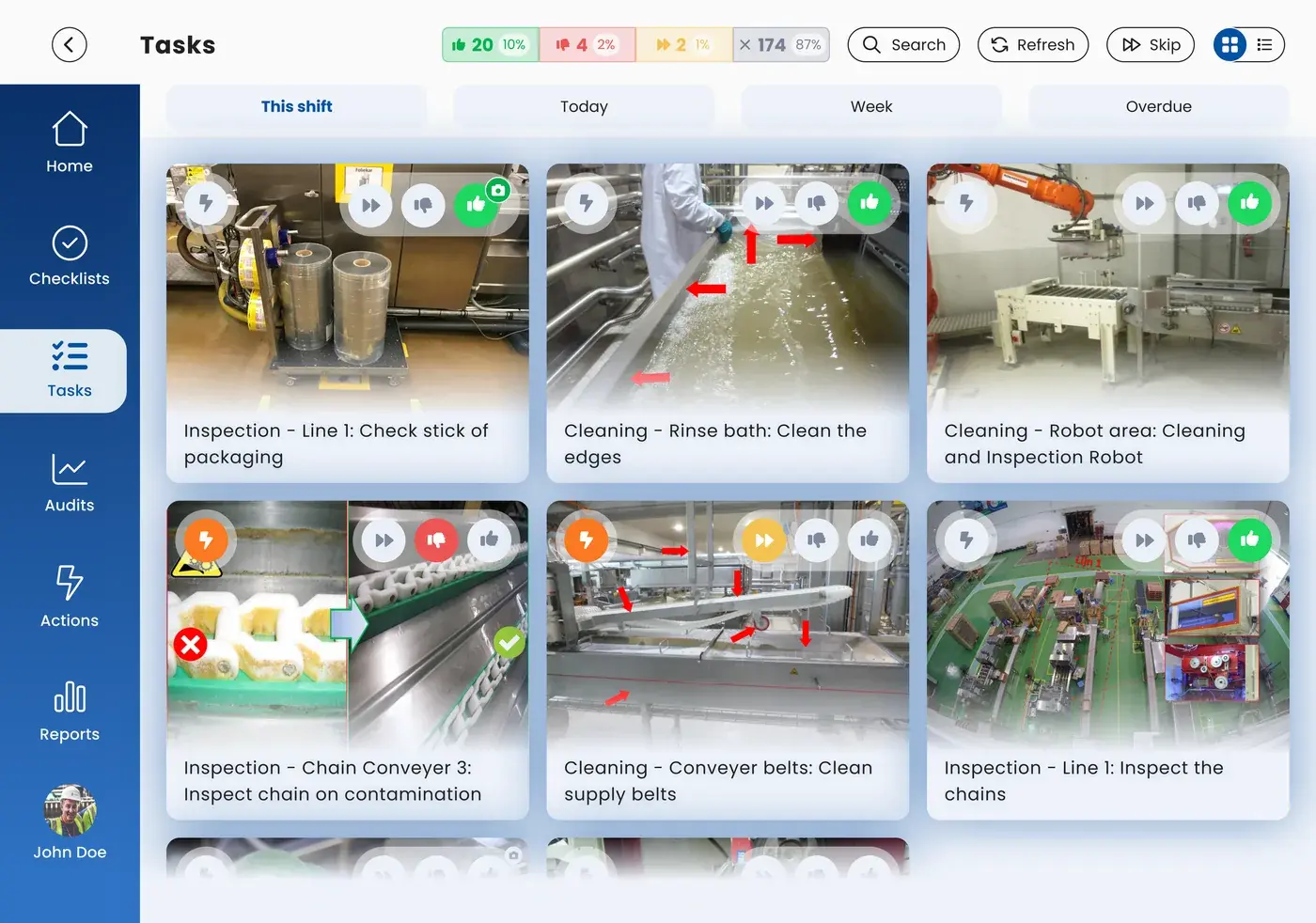
Per production line, work area, or machine, on a fixed frequency.
With work instructions right on site, including photos and videos.
So nothing goes unnoticed, and the reporting shows whether things are structurally improving.
Prevent safety incidents by making sure inspection and lubrication tasks never get skipped.
Keep the line in good condition and reduce quality defects, waste, and rework through standardized, recurring maintenance.
Reduce planned and unplanned downtime through autonomous maintenance carried out on time.
New team members see exactly what, where, when, and how a task needs to be carried out, through photos and videos.
You no longer have to guess whether this week's lubrication round has been done, or why the same breakdown keeps happening. With a clear overview of completed and open tasks, your team works in a structured way instead of letting critical actions sit until they become a problem.
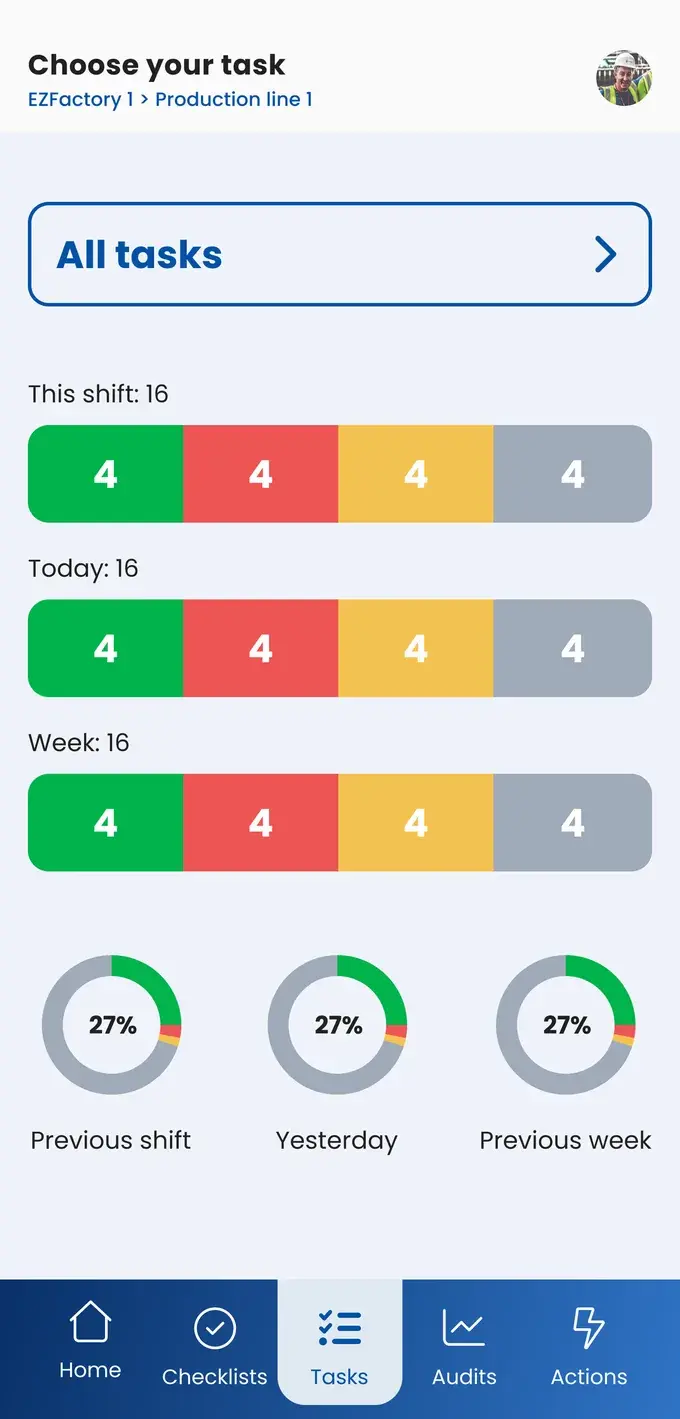
See in the Plan-Do-Check-Act report whether autonomous maintenance is actually being carried out, per line and per location, instead of relying on what each shift leader casually reports.
Or request the business case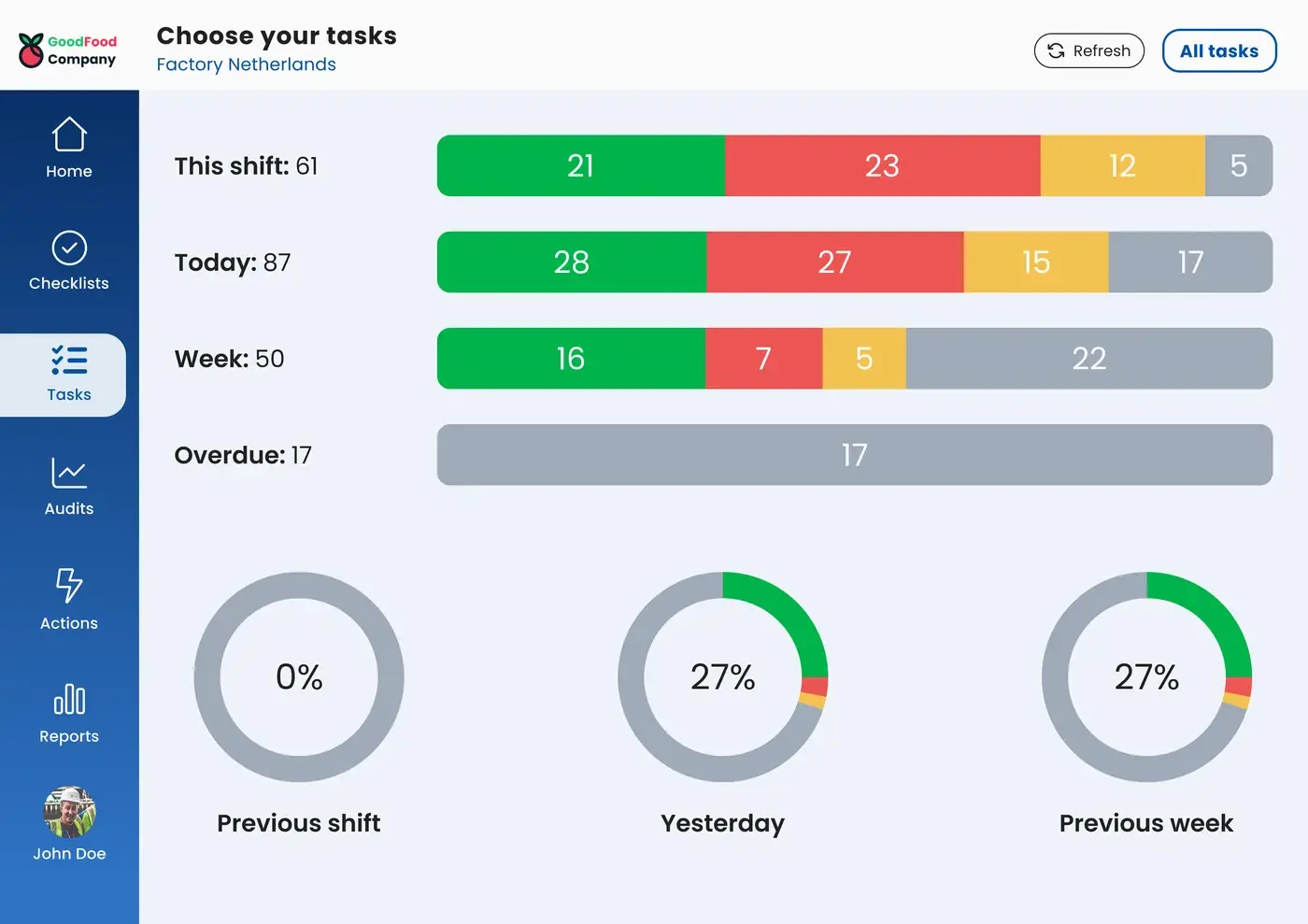
EZ-GO delivered more than we expected.
Just as clear, also to define the boundary with checklists, audits, and actions
Tasks are the rhythm, actions are the exception. If something comes up during a task that needs attention, it becomes an action with a name and a date attached.
Checklists are one-time, step-by-step procedures, such as a changeover or starting up a line or machine. Task management schedules recurring autonomous maintenance, such as weekly lubrication or inspection rounds.
Yes. You can easily duplicate an autonomous maintenance task to identical production lines, and see the status per line and per location in a single report.
You can calculate your savings on task management in the savings calculator.
Take the free shop floor scan and see within two minutes how digital your autonomous maintenance currently is, with three concrete improvement points.