Solutions / TPM
Total productive maintenance software that keeps your TPM program going on the shop floor
New to TPM? Read what TPM is and how the eight pillars work.
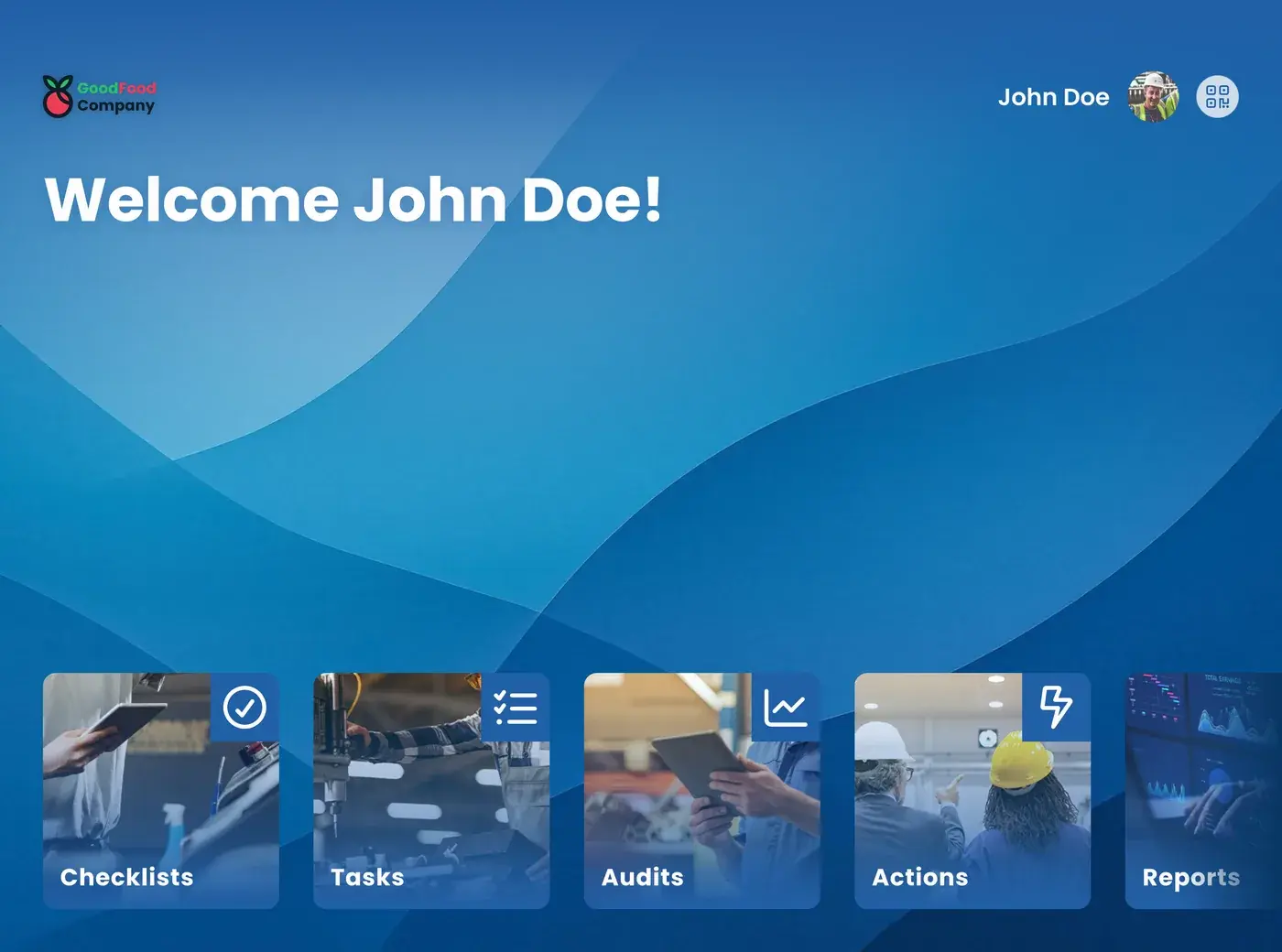
Total Productive Maintenance (TPM) is a program that involves everyone in the plant, from operator to plant manager, in keeping equipment in good condition. Its goal is zero breakdowns, zero defects, and zero accidents.
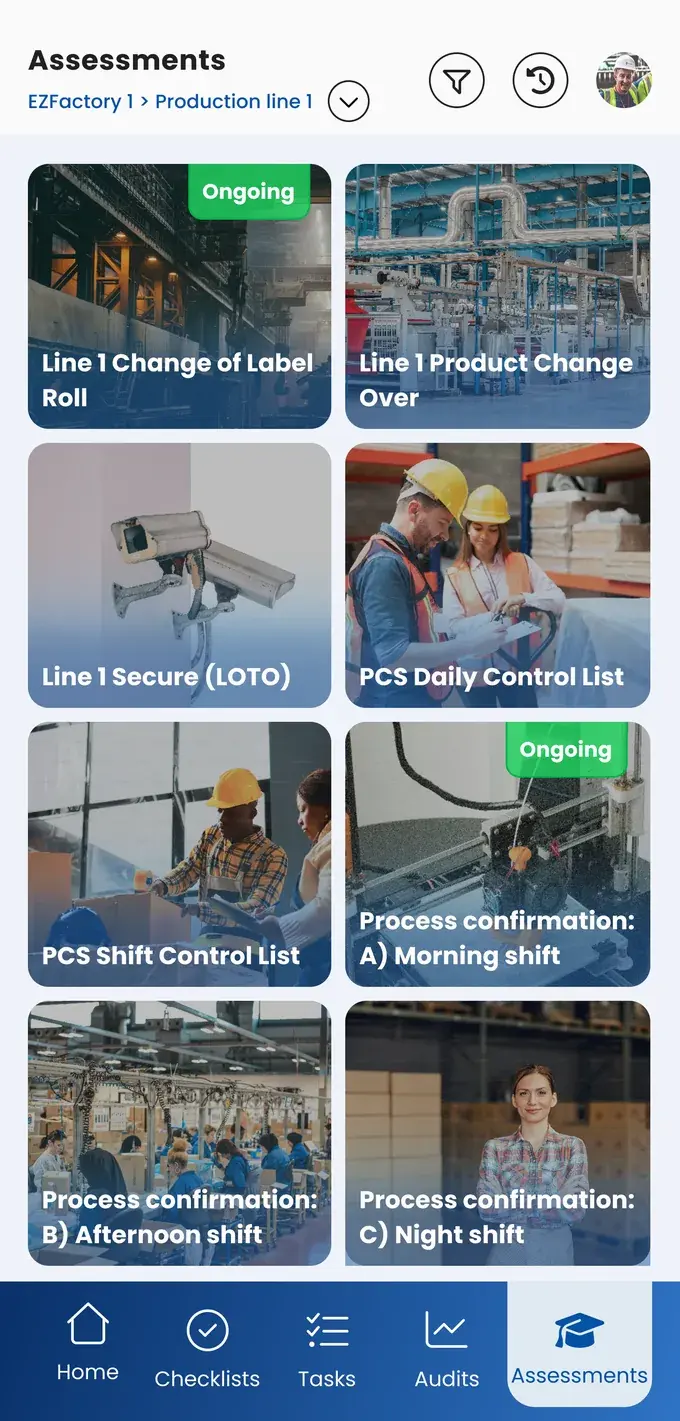
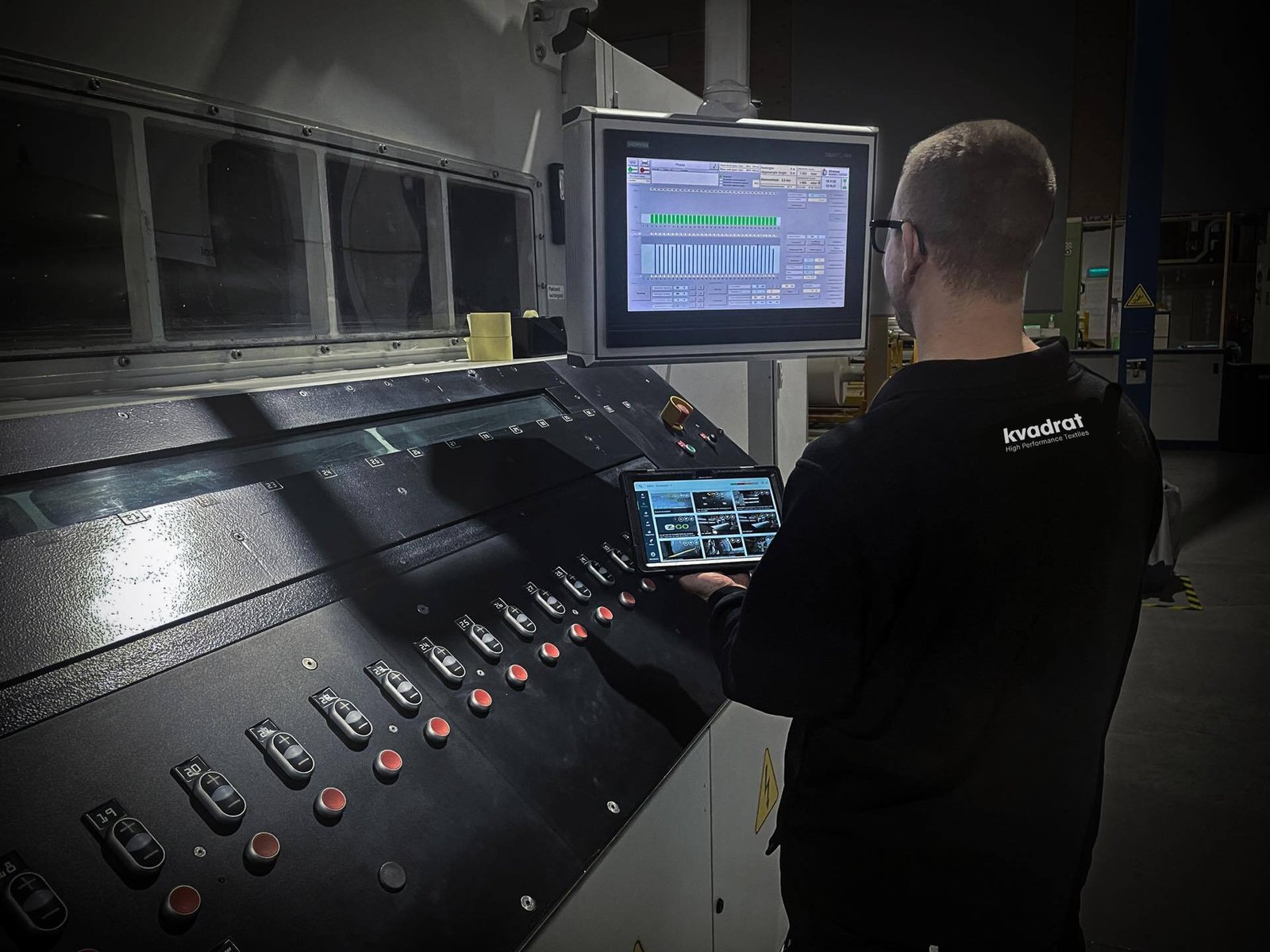
The EZ-GO platform supports the daily work behind the pillars at the line: autonomous maintenance tasks, step audits, defect follow-up, one-point lessons, and skills. Your teams spend their time on TPM itself, and you get the data without collecting it by hand.
Where TPM programs stall after the pilot line
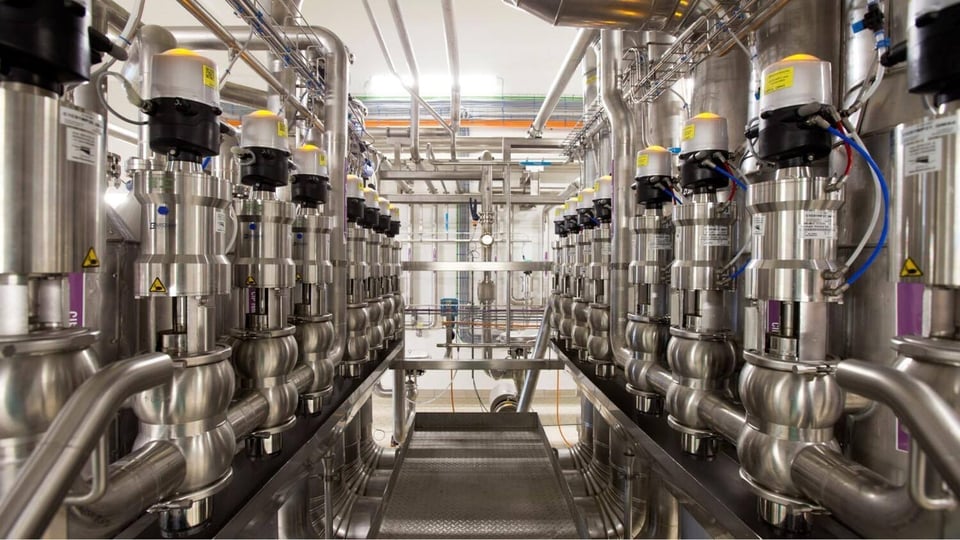
The pilot line usually goes well. The team reaches the first steps of autonomous maintenance, the activity board is up to date, and the steering group sees results. Then the program spreads to more lines, and the administration grows faster than the results.
Defect tags stay open, and nobody can see for how long. One-point lessons get made, but it is unclear who has learned them. Step audits take a day to prepare, and the results stay in a report that the line does not see. The TPM coordinator spends more time collecting data than coaching teams.
The method itself holds up. What makes programs stall is the daily work around the pillars, which is hard to keep up across shifts, lines, and sites.
How the EZ-GO platform supports each TPM pillar
Autonomous maintenance: from step 1 to a standard that holds
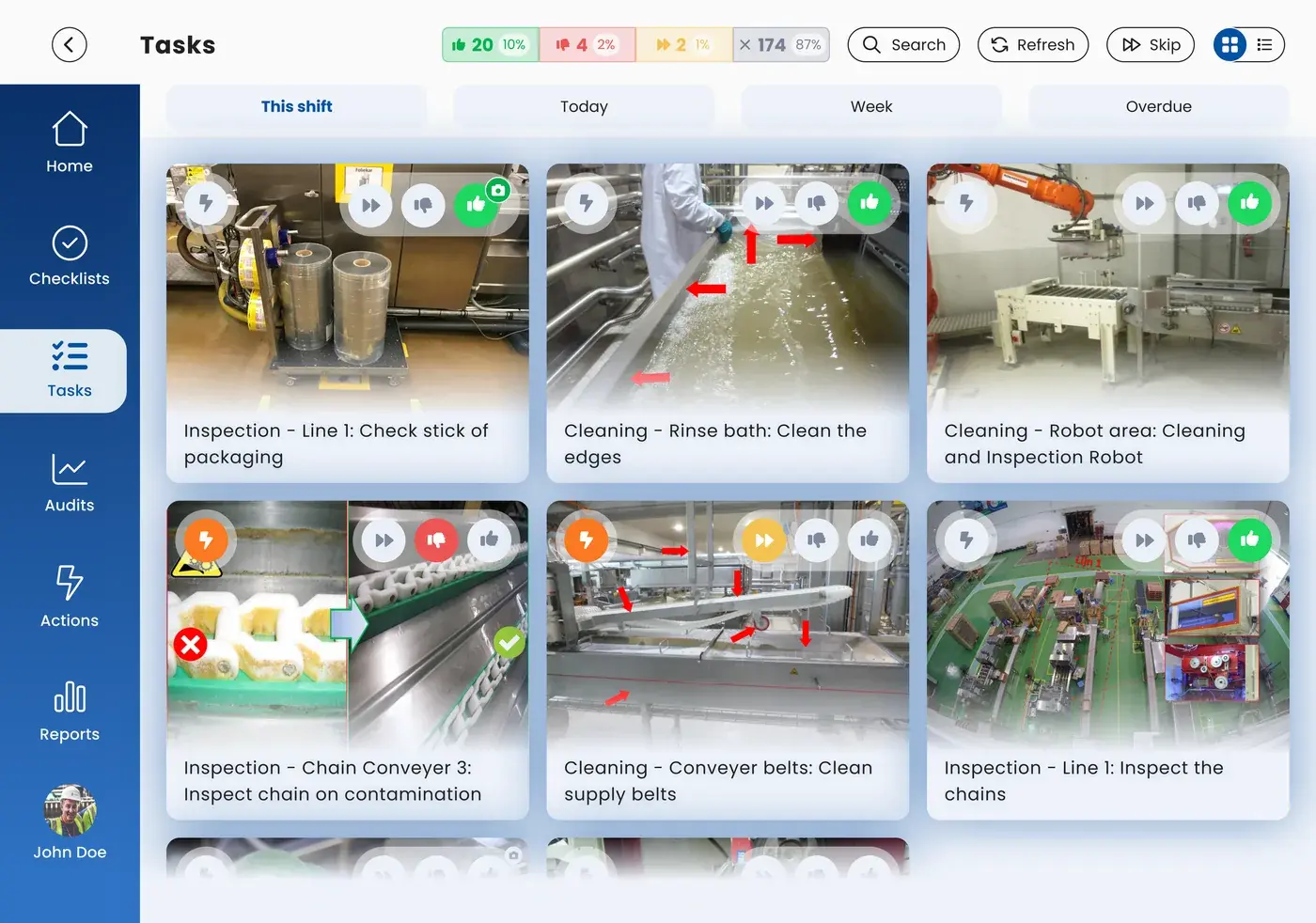
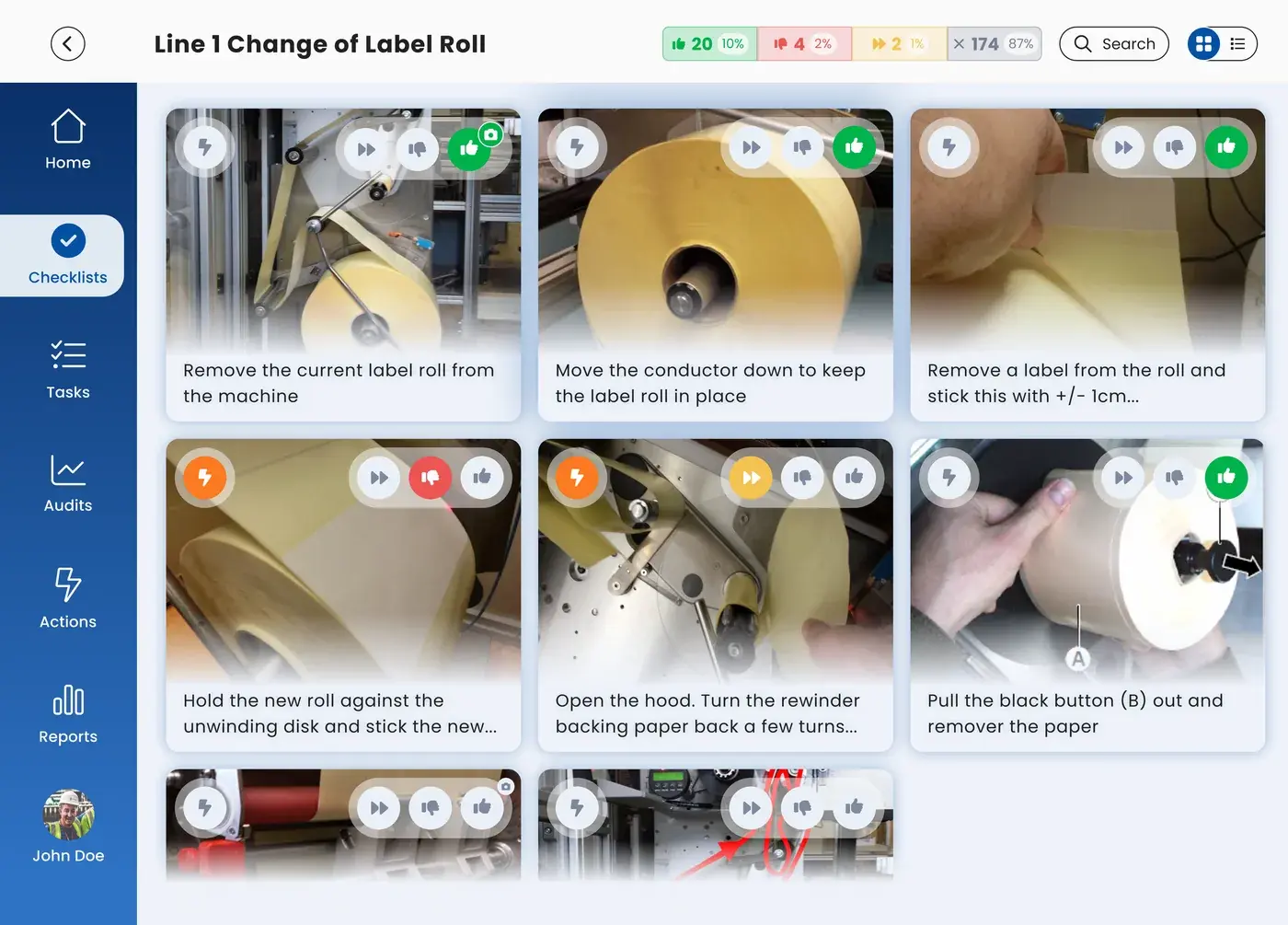
Operators get their cleaning, inspection, lubrication, and tightening tasks for each machine and shift in the EZ-GO app, with photos and videos of the right way. They report what they find with a photo, linked to the machine. You run the audit for each autonomous maintenance step in the app, with photo evidence, and the results show for each line where the standard holds and where it slips. 5S audits work the same way.
Read more about autonomous maintenance in the EZ-GO platform, CILT standards and 5S.
Safety, health and environment: safety checks that do not get skipped
Safety checks, such as guards, emergency stops, and lockout steps, become part of the daily round and of your audits. A lockout and tagout procedure can run as a digital checklist, so everyone follows the same steps before working on the machine. When an operator sees an unsafe situation, he reports it with a photo, and it becomes an action with an owner and a due date. Every check is recorded, so you can show what was done and when. More on safety on the shop floor.
Quality maintenance: connect equipment condition to product quality
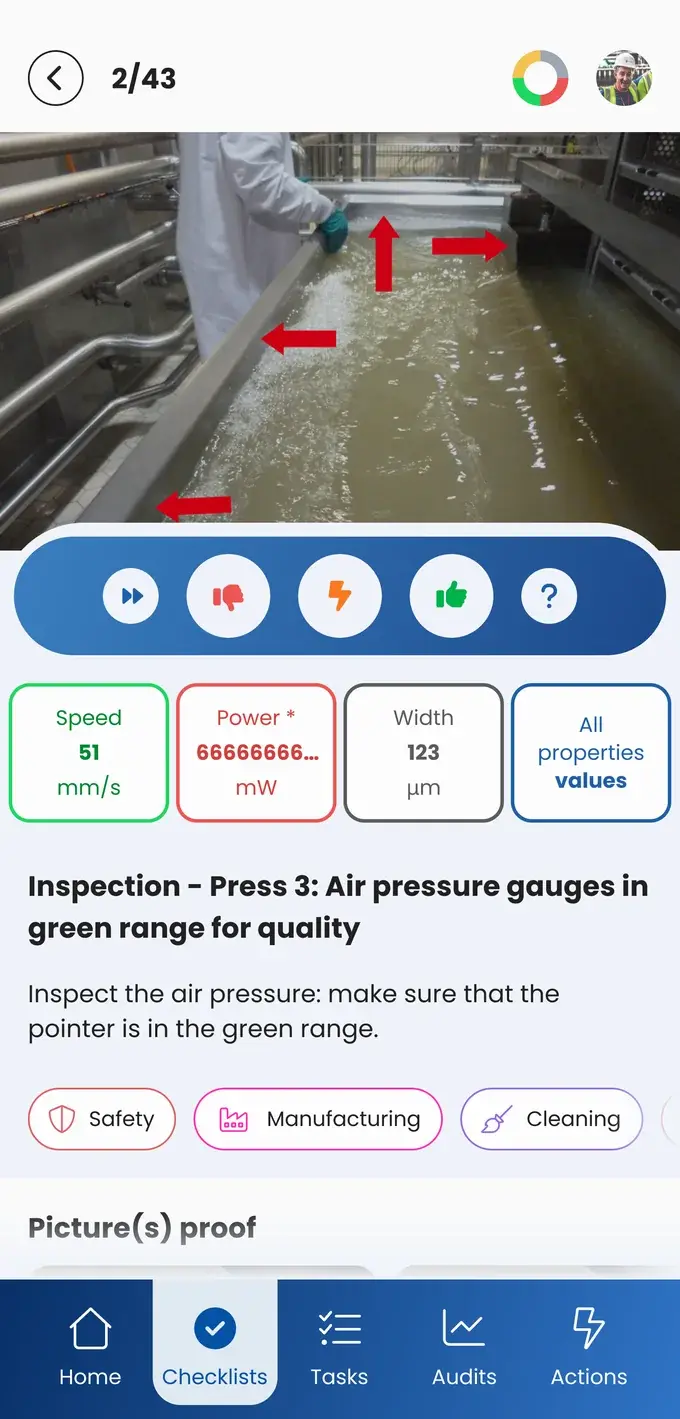
Machine settings that affect quality, such as temperatures, pressures, or centerline values, are checked and recorded at fixed moments in a digital form, as part of a scheduled task. This is the core of centerlining: record the ideal setting for each parameter and keep the machine there. When a value is outside the limit, the operator turns it into an action right away. When a quality problem shows up later, the history per machine helps you find where it started. More on quality and hygiene.
Focused improvement: see which losses keep coming back
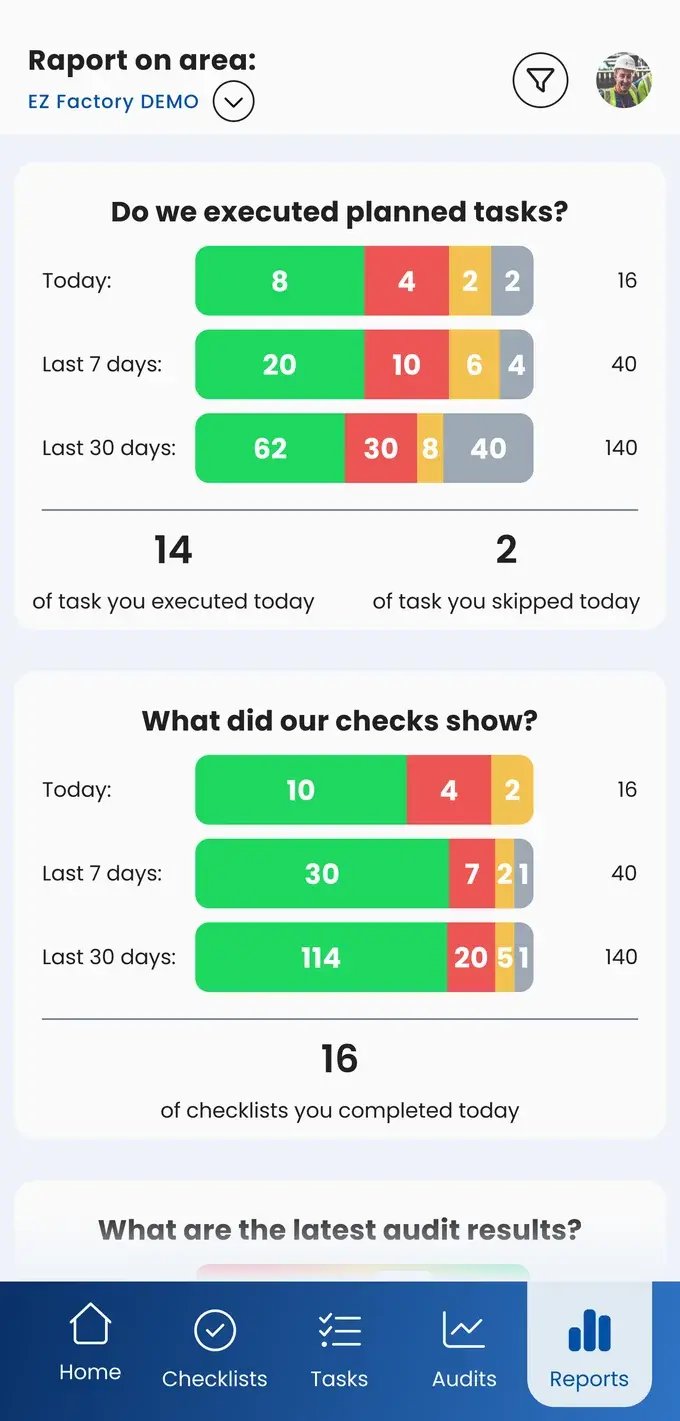
The standard reports in the EZ-GO app show the deviations that come back most often, per line and per machine. That gives your improvement teams a clear place to start, and the input for a Pareto analysis. Ideas from operators become actions with an owner, so they do not get lost between shifts. More on continuous improvement.
Planned maintenance: early signals for your technicians
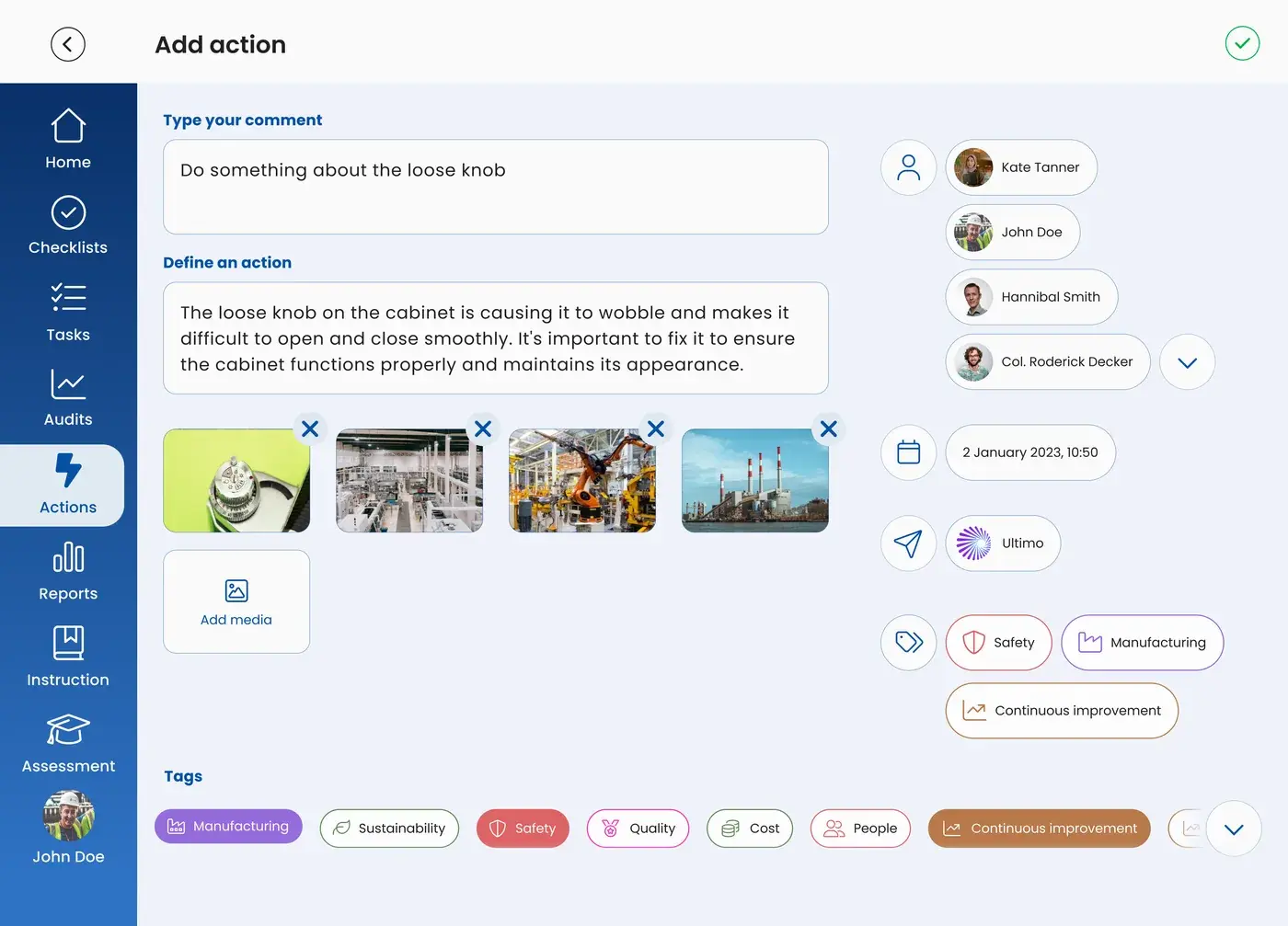
Operators take over routine inspections and report defects early, with a photo and the exact machine. That gives technicians time back for planned work. When a technician finds the cause of a problem, he adds his comments to the action, so the operator can see what is going on. Repairs and replacements are usually planned in your maintenance system. If the EZ-GO platform is connected to that system, for example Ultimo, its status updates and comments are also visible in the EZ-GO app. If the shifts need to watch a machine for a while, someone with editing rights, such as a maintenance engineer, sets up a temporary inspection task. More on what changes for maintenance technicians.
Training and education: know who can do which task
One-point lessons and work instructions sit at the machine, with photos and short videos. The skills matrix shows who is qualified for which autonomous maintenance task, and you assess operators on what is in the instruction. New and temporary staff learn the standard on the job, from your own best operators. More on skills and onboarding.