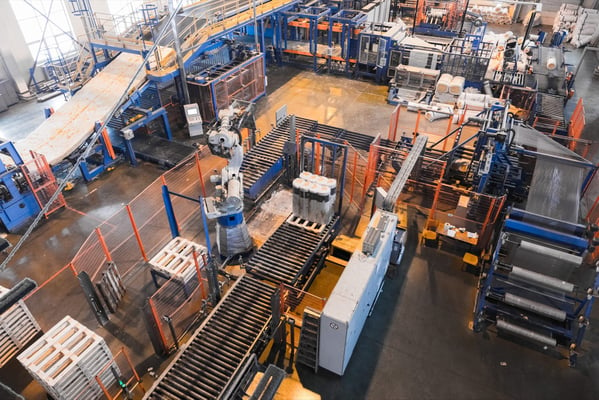



In a factory, everything revolves around quality, efficiency, and predictability. The fewer errors there are in a process, the higher the product quality and the lower the costs. An important way to measure the quality of a process is by determining the Sigma level. The Sigma level shows how well a process performs and how many errors occur on average. And here is the good news: you can calculate the Sigma level of your factory yourself!
What is the Sigma level and why is it so important?
The Sigma level is a statistical measure that indicates how often errors occur in a process. The higher the Sigma level, the fewer defects and errors occur. A high Sigma level therefore means that a process operates very consistently and produces hardly any errors. A low Sigma level, on the other hand, indicates high variation and a greater chance of defective products.
The concept of calculating the Sigma level originates from the Six Sigma methodology, which is used worldwide to improve processes and reduce variation. For factories, this has a direct impact on product quality, production costs, customer satisfaction, and process stability. By maintaining control over the Sigma level, organisations can more effectively manage the performance of their production processes.
What are the Sigma levels?
Sigma levels are often expressed in relation to the number of defects per million opportunities (DPMO – Defects Per Million Opportunities). The table below shows the different Sigma levels and the percentage of defect-free production associated with each level.
Sigma level
Defects per million opportunities (DPMO)
Percentage defect-free
1 Sigma
690.000
31%
2 Sigma
308.000
69%
3 Sigma
66.800
93,3%
4 Sigma
6.210
99,38%
5 Sigma
233
99,977%
6 Sigma
3,4
99,99966%
In traditional production processes, an average Sigma level of 3 or 4 is typically achieved. In contrast, organisations that operate according to the Six Sigma principle aim to reach Sigma level 6, where virtually no errors occur.
Calculate the Sigma level of your factory performance
You can only calculate the Sigma level of a process once you have gathered all the necessary data from the production process. This includes:
- The number of units produced
- The number of defective products
- The number of defect opportunities per product
With this data, you can first calculate the DPMO using the following formula:
𝐷𝑃𝑀𝑂 = (Number of Defects / (Number of Units × Defect Opportunities)) × 1,000,000
Once you have calculated the DPMO, you can convert this value into a Sigma level using a Sigma conversion table or calculator. Many factories already collect this data through their quality control systems, production planning, or digital shop floor systems. By analysing this information, you gain immediate insight into the actual performance of your process.
Example Sigma level calculation
For a factory, calculating the Sigma level might look like this:
Suppose a factory produces 10,000 products in one month. Each product has 5 possible defect opportunities, and a total of 120 defects are identified. The calculation is as follows:
DPMO = (120 / (10,000 × 5)) × 1,000,000
DPMO = (120 / 50,000) × 1,000,000
DPMO = 2,400
A DPMO of 2,400 corresponds roughly to a Sigma level of 4.3. This means the process is already fairly stable, but still has room for improvement towards Sigma level 5 or 6. By performing this calculation regularly, you can track whether process improvements actually lead to fewer errors.