Operators
Operators know which check is due and how to do it. A photo shows that they did it right, and a problem they report gets an answer.

Language
Most quality problems do not start in the lab. They start at the line, when a check is skipped on a busy shift, a label is checked once instead of every half hour, or a cleaning step is done in a hurry. By the time QA sees it, a full run may be on hold.
The EZ-GO platform puts every quality and hygiene check in front of operators at the right moment, with a photo as proof. Deviations are caught at the line, and every one gets an owner.
Trusted by

Your quality plan and your HACCP plan are written with care. At the line, they depend on people remembering them. Checks are recorded at the end of the shift instead of at the moment they are done. QA collects the results days later and types them into a spreadsheet.
On a calm day, this works. Then a new operator starts, a changeover runs late, or a cleaning crew is short one person. A check moves to "later," a hygiene step is skipped, and nobody sees it until a customer complaint or an auditor asks for the record.
The people at the line want to do it right. They need the standard at the moment they do the work, and a quick way to show that it was done.
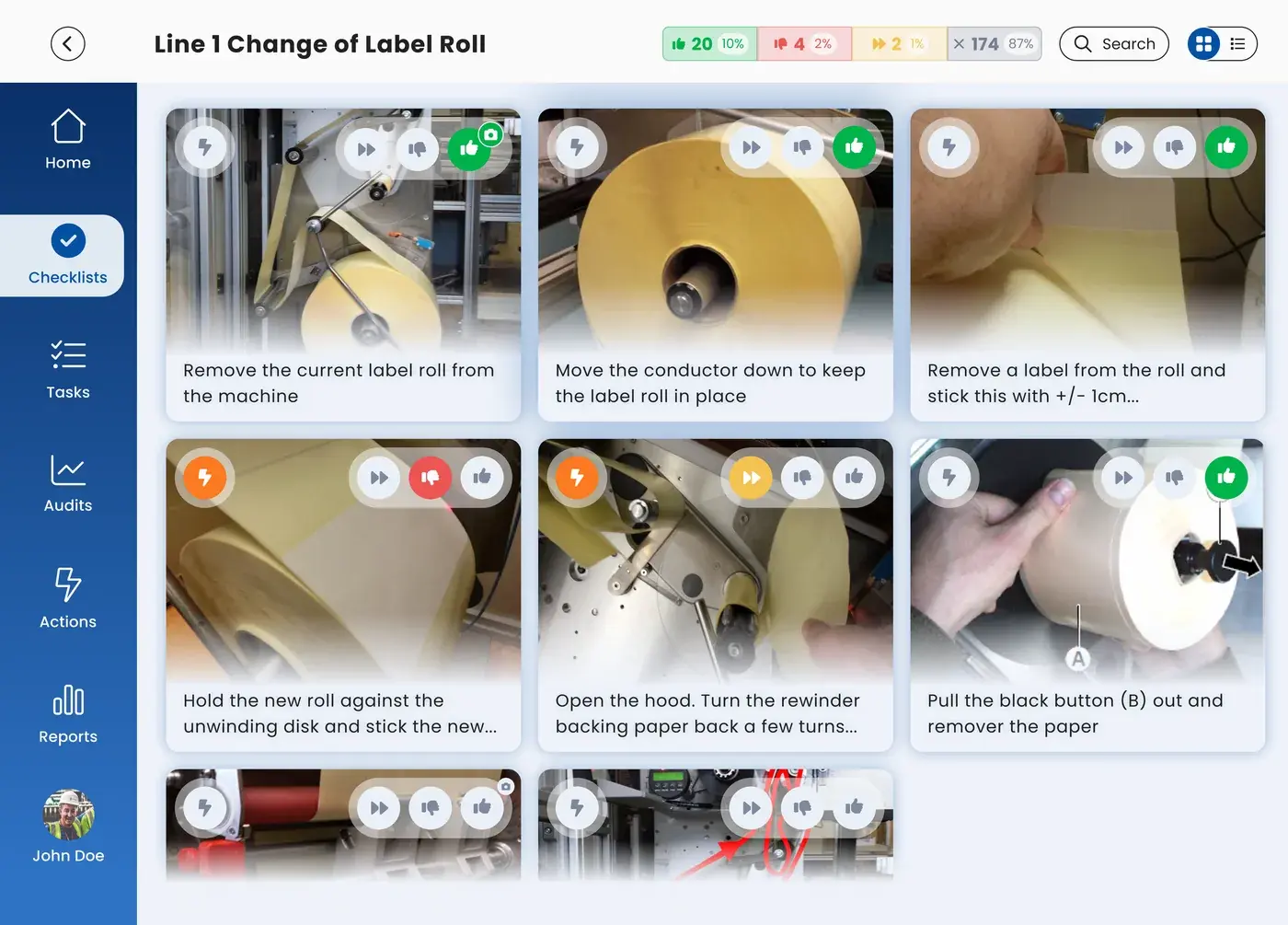
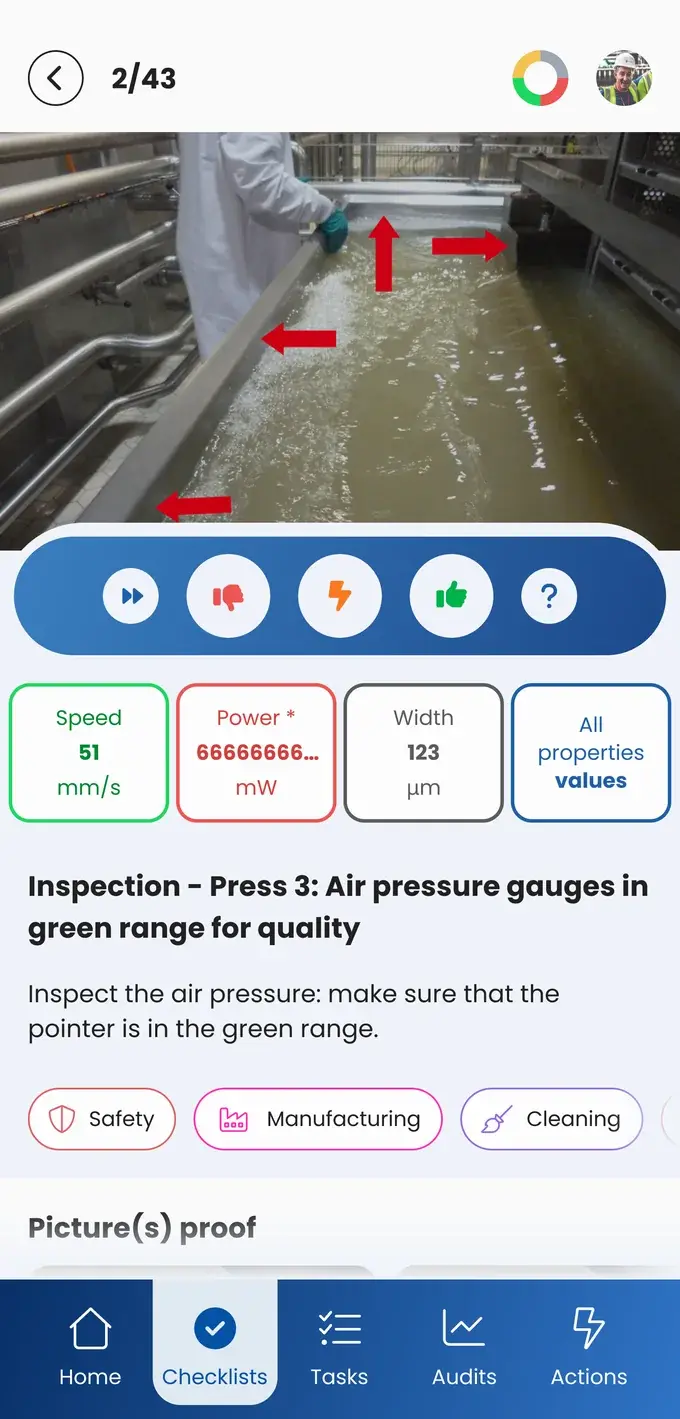
In the EZ-GO app, every quality check is planned for each line, shift, and frequency: label checks, weight checks, seal checks, or the settings that matter for your product. The operator sees which check is due now, and confirms it with a photo or a value. If the label is checked every half hour, a wrong label is caught within half an hour, not after a full shift.
How often to check depends on risk, legal requirements, and the history of the line. Read more about how often to schedule quality checks.
Cleaning and hygiene tasks get the same structure as production tasks: a fixed moment, clear steps, and a photo of the clean result, so everyone knows when the job is done. Hygiene rounds run as a short audit at fixed times. Allergen changeovers can follow a checklist that the next shift can check before production starts.
Cleaning to keep machines in good condition is part of CILT. This page is about hygiene and food safety.
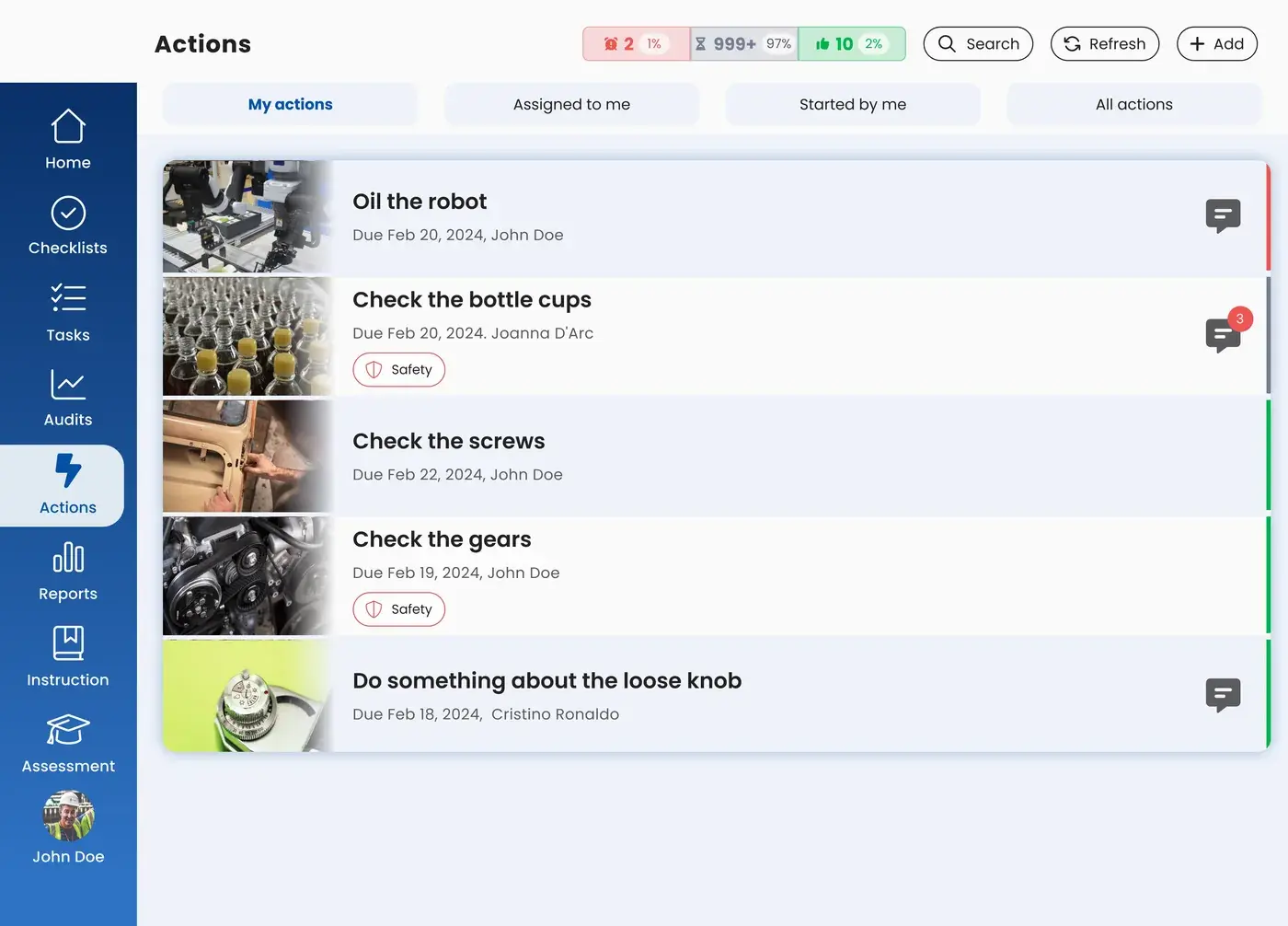
When an operator finds a deviation, he reports it in the EZ-GO app with a photo, linked to the process it is about. It becomes an action with an owner, so QA and the team leader see what is open and what has been solved. When the cause is found, the work instruction or checklist is updated, and every shift works the new way from that moment. How this loop works in detail is on the Continuous improvement page.
For corrective and preventive actions in your quality system, read more about how CAPA works in practice.
Every check, cleaning task, and action in the EZ-GO app is recorded with date, time, the person who did it, and a photo. When a customer or auditor asks what was checked on a certain line on a certain night, you filter instead of search. How audits themselves work in the EZ-GO platform is on the Audits and compliance page.
Your QA team builds the quality checks, hygiene tasks, and work instructions in the platform, with photos of what good looks like.
Each check gets a line, a frequency, and a shift, so it shows up for the right operator at the right moment.
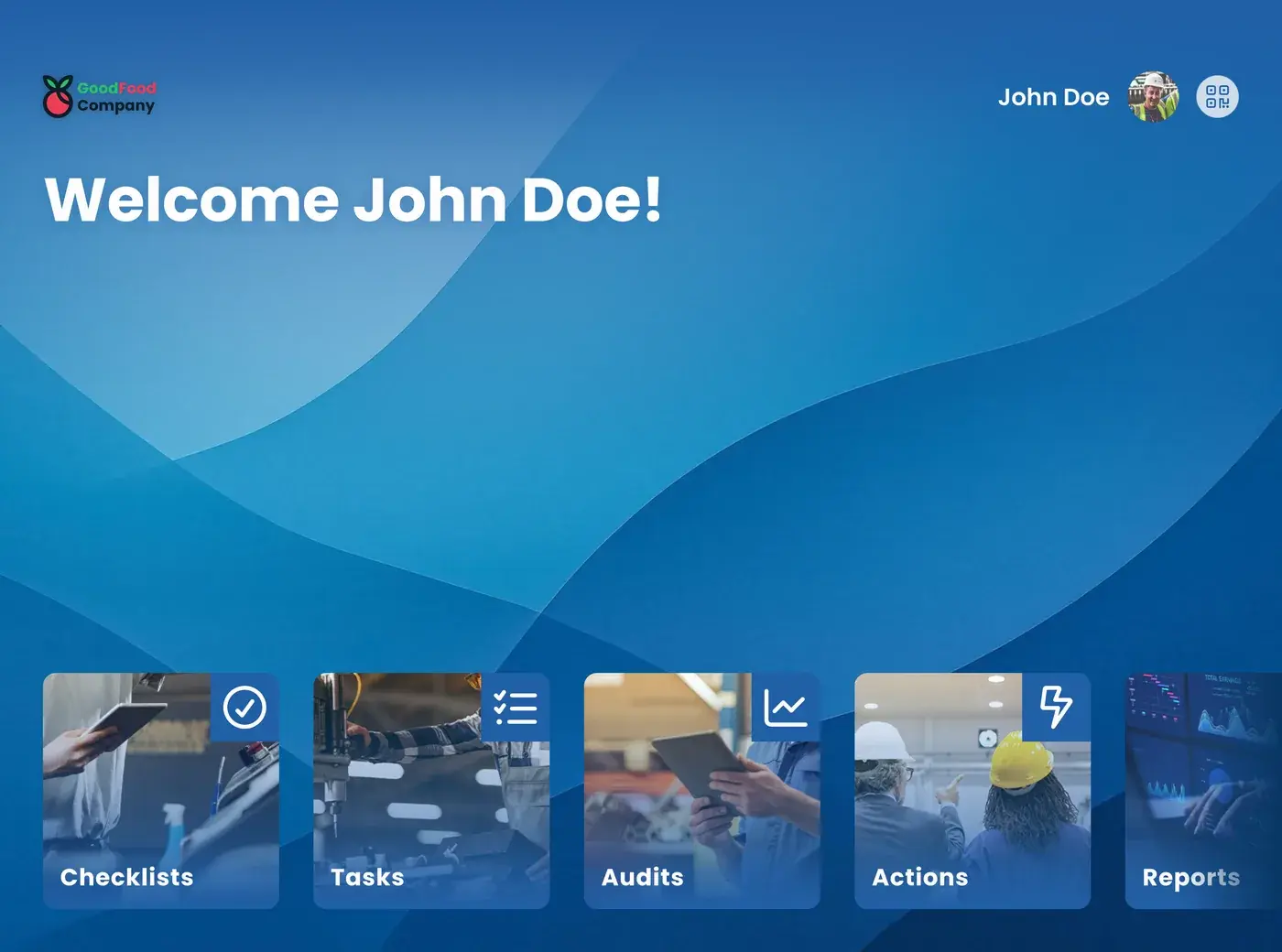
Operators follow the steps on a tablet or phone and confirm with a photo or a value.
A deviation becomes an action with an owner and a status that QA and the team leader can see.
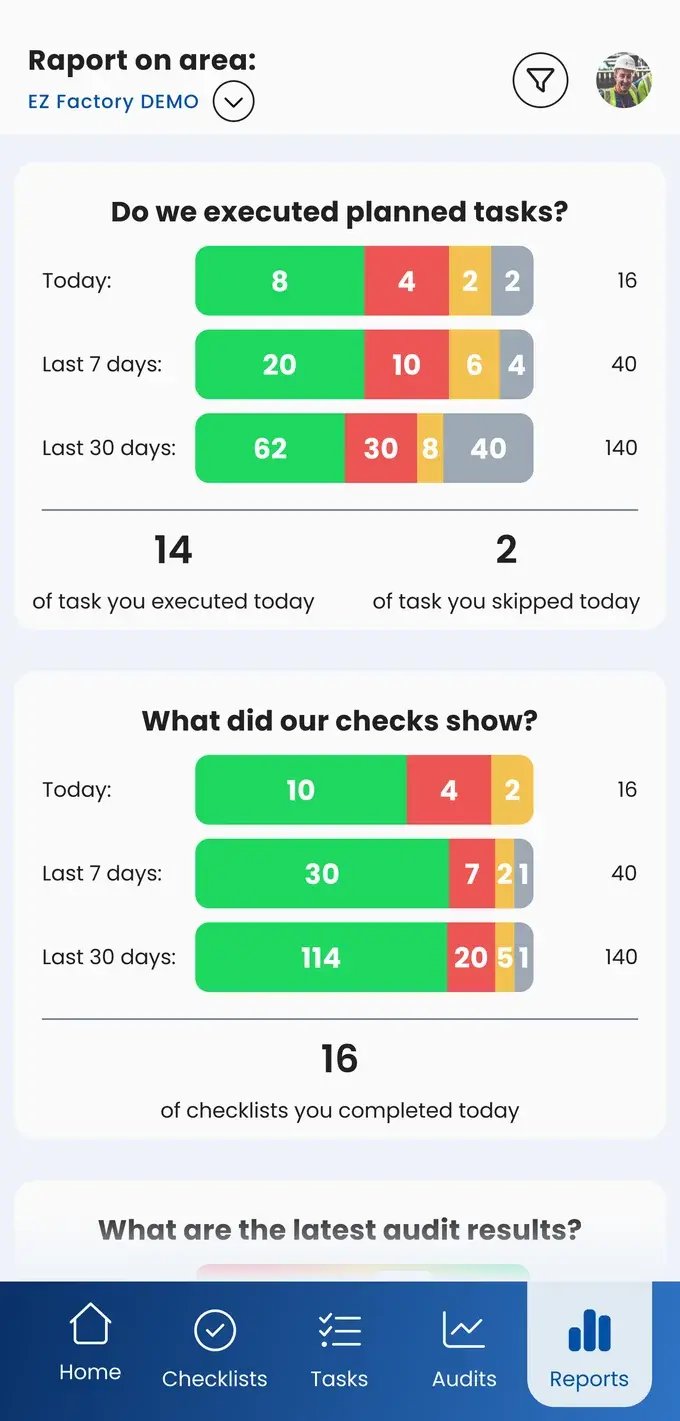
Records are kept for each line, shift, and product. With the EZ-GO reporting pack and Power BI, you see trends across lines and plants.
Most teams start with the checks that cause the most holds or complaints, on one line, and add more once those run well.
Operators know which check is due and how to do it. A photo shows that they did it right, and a problem they report gets an answer.

Team leaders see during the shift which checks are done, which are late, and which deviations are still open.
QA and QESH managers spend less time collecting records and more time on the causes of deviations. Changes to a check or instruction reach every shift at the same moment.
Food safety and hygiene checks are part of the daily work, with a record of every check.
Deviations are caught at the line, before a full run is affected.
20% less waste on average.
New and temporary staff learn the standard at the line, from work instructions and skills.
Food safety and quality control software helps food plants plan, carry out, and record quality and hygiene checks at the production line, and follow up deviations. The EZ-GO platform is a connected worker platform that does this on a tablet or phone at the line, with photo proof and an action for every deviation. Outside food, the same approach is called quality control software for manufacturing.
No. The EZ-GO platform is not a quality management system or a laboratory system. It brings the checks and instructions from your quality system to the operators at the line, and records what was done. Your QMS stays the place for your documents, procedures, and certifications.
Yes, you can set up checks for your critical control points as tasks with a frequency, values, and photos, so they are done and recorded on every shift. Your QA team stays responsible for the HACCP plan itself.
Quality control checks products and processes to find deviations. Quality assurance makes sure the process is set up so the product is right every time. The EZ-GO platform supports both: the checks at the line, and the standard operators follow. Read more about quality assurance in a production environment.
Information is at the line when an operator needs it, every shift follows the same instruction, checks are done completely, and what was done is easy to trace when something goes wrong. Read more about eight ways to improve food safety.
You start on one line with the checks that matter most. Your QA team builds them in the platform, and operators can begin within a few weeks. After that, you add lines and plants.
In a short demo, we show you how a quality check with photo proof works in the EZ-GO app, and what happens when an operator finds a deviation.