

Budget season is here. Somewhere in your plant, someone is building a spreadsheet to prove an investment will pay off. It takes weeks. And it often misses the costs that never show up in a report.
There is a faster way to start. Walk the floor for two hours and find the problem that keeps coming back
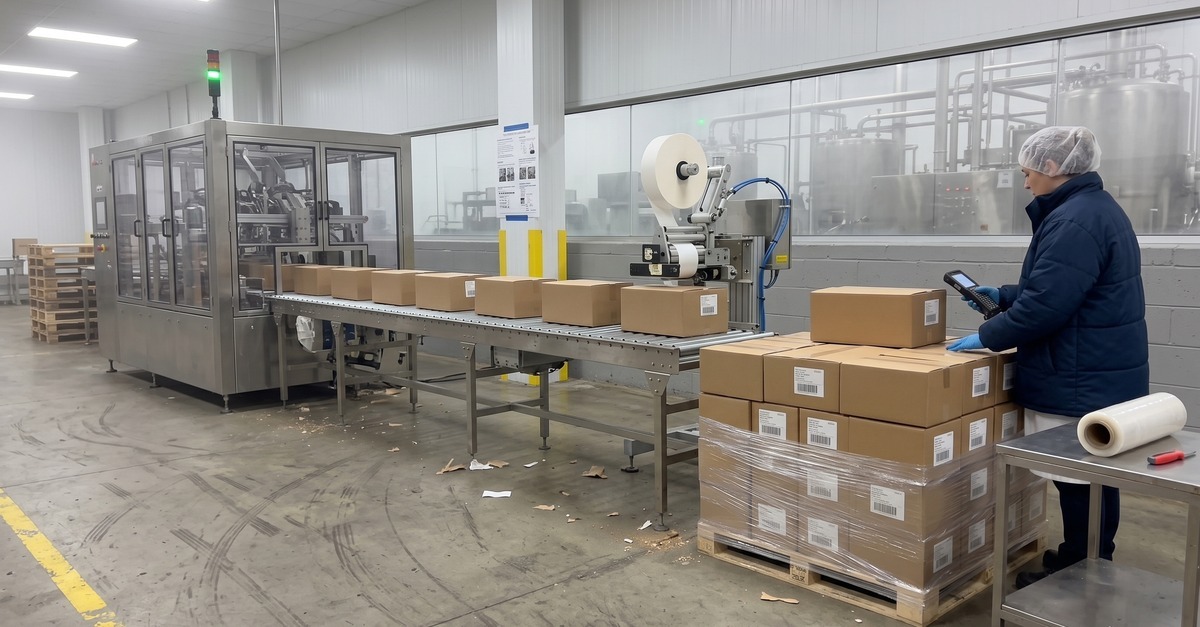
Our co-founder Randy once did exactly that with a plant manager. At the end of one line, temporary workers were relabeling a full pallet load of products. A label applicator had drifted earlier in the process. Randy and the plant manager added up the cost on their phones, right there on the floor. Then the plant manager said: "We have 8 lines. And 8 printers."
Step 1. Walk the floor with the people who run the line
Go to the line itself. Bring the team leader and talk to the operators. Ask one question: what keeps coming back?
Look for signs like these:
- rework at the end of the line
- people waiting for a machine to restart
- temporary fixes that have become permanen
- the same fault in the shift log, week after week
Step 2. Pick one problem, and start with safety and quality
Choose one problem to work out. Safety and quality come first, because that is where the biggest risks are
Take a label error. On a pallet, it costs money. In a store, it can become a safety issue. Think of an allergen missing from the label, or a batch you can no longer trace. A small fault at the line can end in a recall
Recalls are rising. In 2025, the European Commission's alert network logged a record 10,490 notifications, up 11% on the year before. In the US, recalls rose 15.4%, the highest level in nine years.
Step 3. Calculate what one incident costs
You do not need a complex model. The Dutch call it calculating on the back of a beer coaster. Add up what one incident costs in people, lost time and materials
This was Randy's example for the label problem
- 6 temporary workers × 8 hours × €50 = €2,400
- Lost production time: €2,000
- Extra supervision, materials and rework: €1,500
That makes €5,900 for one incident. Your numbers will be different. Write them down anyway, so the cost is there in black and white.
Step 4. Scale it up
Now multiply. How often does it happen? On how many lines
In Randy's example, one incident a month already meant €70,800 a year. With 8 lines, the problem does not have to hit every line every month. Prevent a handful of incidents across the plant, and the investment starts paying for itself.
Step 5. Find the routine that prevents it
Most recurring problems have a simple cause and a simple fix. For the label problem, it was a short check before and during production:
- Clean the printhead.
- Check the sensors.
- Verify the label position.
- Scan the first barcode.
- Confirm the correct recipe.
Timing matters as much as the check itself. Check the label with a photo every half hour, and you catch a mistake within that half hour. Without that check, you may find it eight hours in. An eight-hour hold becomes a thirty-minute one.
Step 6. Make the routine stick at the line
A routine only works if it happens every time, on every shift. On a busy night shift, a check on paper is easy to skip
In the EZ-GO platform, the operator gets the check at the line, at the moment it is due. He sees a photo of what good looks like and takes a photo as proof. The result is recorded, so nobody has to dig through paper later.
What else belongs in your business case
Once the first problem is on the table, you can add more, like less paperwork, faster audits and shorter changeovers
You do not need all of that to start the conversation. One recurring problem with a clear price tag is often enough.